


South Africa’s Water Crisis: What You Need to Know
Updated: Jan 10, 2025
Author: Surayya-Sani Danpullo
Date: 11.12.24
What do you think would happen if the taps ran dry and you had no source of water? For many South Africans this is not a hypothetical question, but a harsh reality As water scarcity grows, it is important to understand the roots of the problem and find sustainable solutions
The state of water
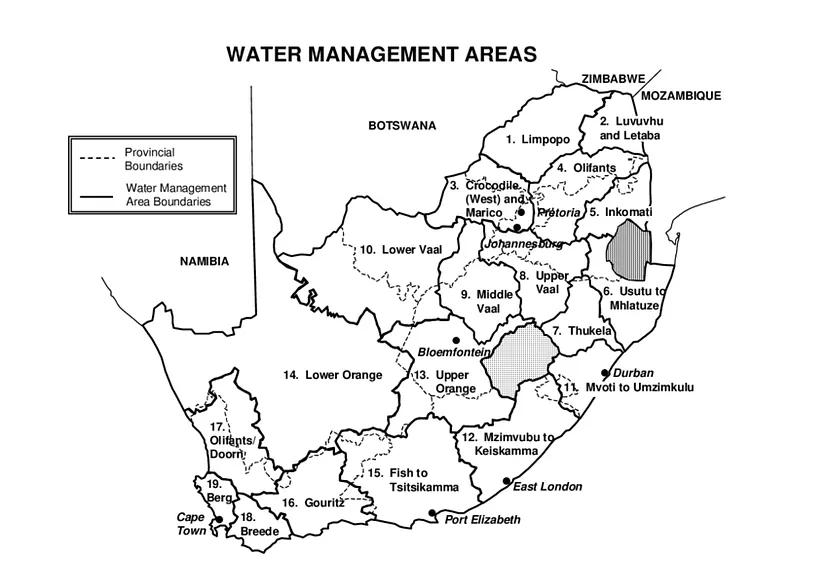
South Africa is no stranger to water scarcity, but recent years have pushed the country to its limits. Decreasing dam levels and unpredictable rain patterns paint an interesting picture of the country’s water resources. South Africa is classified as a water-scarce country. Water in South Africa is unevenly distributed with high rainfall regions like KwaZulu-Natal contrasted by dry provinces like the Northern Cape. Many cities in the country face recurring droughts, take Cape Town as an example. The city nearly came close to “day zero” (a term given to a period where a region runs out of water completely) in 2018 when reservoirs nearly ran dry. Now what could be the reason for such horrific conditions?
Causes of the crisis
The cause of South Africa’s water crisis can be attributed to both human and natural factors.
From frequent droughts caused by climate change to the country’s aging water infrastructure, these factors have definitely left their mark on South Africa’s water system.
The global rainfall average is 860mm compared to South Africa’s annual rainfall of 450mm. The reason for this is also the reason for many climate irregularities around the world, climate change. What exactly is climate change and how does it affect South Africa’s rainfall patterns and water system?
Climate change is the increase in the Earth’s average temperature. Climate change causes global temperatures to rise, leading to an increase in evaporation rates. What does this mean? This means water evaporates faster from dams, lakes, and rivers, reducing the overall water supply.
When temperatures increase, the demand for water in the agricultural sector and for human consumption increases as well, putting further strain on the already strained water system
Unsurprisingly climate change also creates a shift in rainfall patterns by disrupting traditional weather patterns, leading to irregular and reduced rainfall in many parts of South Africa. Rainfall becomes less predictable, with longer dry spells and shorter, more intense downpours which isn’t really good for replenishing groundwater and reservoirs .
These extreme weather conditions dry out the soil, reducing its ability to retain water, leading to desertification and increases the effects of drought, especially in provinces like the Eastern Cape and the Northern Cape.
The human cost of water shortages
Water shortages don’t just include having empty taps, they bring widespread consequences for health and livelihoods, especially South Africa’s most vulnerable communities
Many communities in South Africa lack access to clean drinking water, putting them in between a rock and a hard place. They can either use the water from contaminated sources or die of thirst and hunger. More often than not residents in these areas will opt for the first option which leads to the spread of waterborne diseases like cholera.
Unfortunately it doesn’t stop there. The economy is greatly affected by water shortages as well. farmers (both commercial and subsistence) face reduced crop yields and livestock deaths due to droughts. This in turn leads to food insecurity and economic hardship. Industries reliant on water, such as manufacturing and mining, experience operational disruptions, affecting employment. All these factors in turn drive up inflation, affecting low-income households
Efforts to combat the crisis
Amid the challenges, both the government and local communities are stepping up with initiatives aimed at managing water resources and encouraging equal access
The government has invested in building dams, such as the Lesotho highlands water project to improve water supply. Not only that, the government has implemented policies such as the national water act of 1988 which is aimed at increasing sustainable water distribution and sustainable use, prioritizing basic human human needs and ecological protection. In rural areas, local organizations and NGOs work to install rainwater harvesting systems and community-managed boreholes, ensuring access to water
for households and small-scale farming. Community members also team up with local government to demand better water services and hold authorities accountable for mismanagement and delays
A way forward
While the water crisis is still a big issue in South Africa, innovative solutions and sustainable practices can help reduce the impact of the water shortage. Here are a few ways you can help: limit shower time
fix any leaks as soon as possible
turn off taps while brushing teeth or washing dishes
use water-efficient devices
Install rainwater collection systems to for non-drinking purposes
share knowledge about the water crisis
encourage others to adopt water-saving habits
join local clean-up drives volunteer at organizations working on water accessibility and conservation efforts
With only 2.5% of Earth’s water being fresh and less than 1% accessible to humans to use, the South African government as well as its citizens must prioritize effective water management. Each effort, big or small, contributes to preserving this precious resource for decades to come.
References
World Bank: Addressing Water Challenges in South Africa. This article provides data on water resource availability, impacts of climate change, and government projects to improve water security.
Website: https://www.worldbank.org
World Economic Forum: Cape Town's "Day Zero" and Lessons for South Africa's Water Security. This article discusses crisis management and public-private collaboration.
Website: https://www.weforum.org
Department of Water and Sanitation, South Africa: Water and Sanitation Resources and Policies. This is the official resource for water infrastructure updates, statistics, and ongoing programs.
Website: https://www.dws.gov.za
GreenCape: Water Sector Reports and Case Studies in South Africa. This covers industrial and agricultural water management strategies.
Website: https://www.greencape.co.za
Author Information
Fist name: Surayya-Sani
Last name: Danpullo
Instagram: @totallynot_sue


Comments